
The Disappearance of Gold-Semi Negative Correlation During Crisis Periods
For years, gold and equities—especially high‑beta sectors like semiconductors—were seen as opposites in a portfolio. Gold was the safe haven; semis were the growth engine. When risk assets sold off, gold was supposed to rise, offering protection. When growth surged, gold might lag while semis rallied. That simple negative correlation made intuitive sense. Then crisis periods started to complicate the picture. In more recent shocks, gold and semis have sometimes moved together, or at least failed to deliver the clean inverse dance many investors expected.

This post explores the disappearance of the gold–semi negative correlation during crisis periods, through a macro lens of interest rates, exchange rates, credit, and commodities. The aim is to keep the narrative flexible and polished, because correlation regimes don’t change overnight—they evolve with the structure of markets.
Gold and Semis: The Traditional Story
Traditionally, the role of gold and semis in a portfolio could be summarized like this:
- Gold: A store of value and hedge against inflation, currency debasement, and systemic risk. Historically, gold often outperformed during equity bear markets and periods of high uncertainty, earning its “safe haven” label.
-
With that contrast, a negative correlation between gold and semis seemed natural: when crisis pushed semis down, gold might rise as investors sought safety. That pattern held often enough to make it a rule of thumb—but not a law of nature.
Macro Linkages Behind the Old Correlation
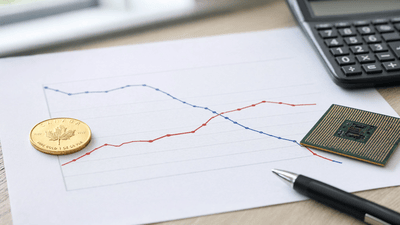
The classic negative correlation between gold and semis was underpinned by macro linkages:
-
During risk‑off periods, central banks often cut rates, lowering real yields and supporting gold. At the same time, lower growth expectations and higher discount rates for equities hurt semis. -
Crisis often pushed the dollar higher or created FX volatility; gold, priced in USD but viewed as a global store of value, could benefit from safe‑haven flows even as export‑oriented semis suffered. -
Widening spreads and tightening credit conditions hurt leverage‑sensitive and capex‑heavy sectors like semis, while gold, with no credit risk, gained relative favour. -
Gold’s role as an inflation hedge could surface when commodity and price shocks appeared, while semis faced margin pressure from higher input costs and weaker demand.
These macro forces created conditions where gold’s appeal rose as semi risk rose, yielding a negative correlation in certain regimes. But as the structure of crises and monetary policy changed, those linkages evolved.
What Changed: Crisis Dynamics in Modern Markets
In recent decades, crisis periods have looked different from the textbook model:
-
Central banks, including the Fed and BOJ, have responded to crises with rapid rate cuts, QE, and liquidity facilities. These actions compress yields across assets and can support both gold (via lower real yields) and semis (via lower discount rates). -
In some crises—like pandemic periods—technology and semis were seen as beneficiaries of structural shifts (remote work, cloud, AI), attracting capital even as other risk assets sold off. -
Gold has been increasingly traded via ETFs and futures alongside other risk assets. In extreme risk‑off episodes, gold can be sold to meet margin calls, making its behaviour more correlated with equities. -
In very severe crises, everything risk‑related can sell off at once, while cash and short‑term government bonds become the only true havens.
Under these conditions, the old gold–semi negative correlation weakens or disappears. Both can move up or down together, or gold may move less protectively than expected, reducing its hedging role against semi volatility.
Interest Rates and Real Yields: A Shared Driver

Interest rates and real yields are key to understanding why gold and semis sometimes converge during crises:
In a crisis where central banks slam rates lower and embark on QE, both gold and semis can rally in response to the same real yield move. That shared driver compresses the negative correlation. Instead of “gold up, semis down,” we see “both up,” particularly in mid‑to‑late crisis stages when policy support and risk‑on recoveries emerge.
Exchange Rates and Global Liquidity: Dual Beneficiaries
Global liquidity and FX also play dual roles:
-
When global policy turns aggressively dovish, the dollar can weaken or stabilize. Gold, often viewed as an alternative store of value, can benefit from this environment. -
The same environment supports risk assets, including semis, which thrive on global demand for tech and manufacturing recovery.
In such phases, the market’s shift from acute risk‑off to reflation/risk‑on can make both gold and semis attractive, eliminating the earlier negative correlation. Instead, investors see gold as part of a broader reflation trade and semis as part of the growth engine, both benefiting from renewed liquidity.
Credit and Margin Calls: When Gold Sells Off Alongside Semis

In severe crisis episodes, the behaviour of gold and semis is shaped by credit stress and margin mechanics:
-
Widening spreads and funding pressures push investors to de‑risk. Semi stocks, being high beta, drop quickly. -
Leveraged investors and funds facing losses in equities or credit may sell gold holdings to raise cash. Gold, despite its safe‑haven reputation, can temporarily correlate positively with equities as both are sold. -
In extreme cases, “sell what you can” replaces “sell what’s risky,” blurring safe‑haven separation.
In these conditions, the expected negative gold–semi correlation disappears. Both are pulled into the same liquidity vortex. Only after margins and credit stress ease can gold reassert its role as a diversifier, and semis respond differently to subsequent macro and fundamental developments.
Commodities and Inflation Narratives: Complex Cross-Currents
Gold’s hedging role is often tied to inflation and commodity cycles. Semis interact with these cycles differently:
-
In crises with inflation shocks (e.g., energy spikes), gold can rally on expectations of future monetary debasement or price instability. -
Higher energy and metal prices can raise manufacturing costs and compress margins, hurting semis, while in some cases structural demand (AI, electrification) can outweigh cost concerns. -
The result is that inflation and commodity narratives can push gold and semis in the same direction or opposite directions, depending on which story dominates. During some crisis periods, inflation fears and tech optimism converge, creating an environment where gold and semis both reflect broader reflation, again weakening the simple negative correlation.
Historical Examples: When the Correlation Broke
Across crises, we can see patterns where gold–equity negative correlation weakened or disappeared:
-
Gold initially served as a hedge, but during the worst phases, cross‑asset selling reduced its safe‑haven effect. Later, as QE and reflation took hold, gold and risk assets could rise together. -
Gold behaved as a safe haven in the initial sell‑off, then sold off sharply alongside equities during intense margin calls, before rallying later in response to massive monetary stimulus. Semis, after an initial drop, became perceived winners of structural digitalization, rallying strongly with gold. -
In periods of high inflation and aggressive rate hikes, gold’s behaviour has been mixed, sometimes failing to fully hedge equity risk as markets focus on real yields, while semis trade heavily on the interplay between inflation, rates, and AI narratives.
In each case, the correlation between gold and semis wasn’t stable. It shifted from negative to positive or near zero through different crisis phases, validating the idea that the “disappearance” of the old negative correlation is not an anomaly but a reflection of evolving crisis mechanics.
Implications for Portfolio Construction and Risk Management
For investors, the main implication is straightforward: don’t assume a stable negative correlation between gold and semis during crises. Specifically:
-
Recognize that in severe stress, cross‑asset correlations can move toward 1 as liquidity drives behaviour, reducing diversification benefits. -
Combine gold with other defensive tools—duration, high‑quality credit, derivatives—rather than relying solely on gold to offset semi risk. -
Early risk‑off vs late reflation vs policy‑driven rallies can produce very different gold–semi correlation patterns; adjust hedging and allocation accordingly. -
Monitor real yields, FX, credit spreads, and commodity trends to understand when gold’s traditional safe‑haven properties are more likely to hold and when they might falter.
Semi-specific strategies also matter:
- Shift toward higher quality semi names and lower leverage in crisis phases, so that funding and margin pressures are less acute.
In other words, treat gold as one component of a macro hedge, not a magic inverse mirror to semi volatility.
Why the Disappearance Matters: Macro Linkages Evolve
The disappearance—or weakening—of the gold–semi negative correlation during crisis periods matters because it signals how macro linkages have evolved:
- Central banks now respond faster and more aggressively, altering the timeline and shape of risk‑off and reflation phases.
All of this means the old mental model—“gold hedges risk, semis express risk”—needs updating. During crises, both can be pulled into the same macro currents, and their interplay depends on deeper variables: interest rates, FX, credit, and commodities, not just a simple one‑line correlation.
Closing Thoughts: Reading Correlation as Context, Not Law
“The Disappearance of Gold–Semi Negative Correlation During Crisis Periods” is ultimately a reminder that correlations are context, not law. Gold remains a useful hedge and diversifier in many environments; semis remain a powerful growth and risk expression. But when crises unfold under modern policy regimes, the macro linkages that connect interest rates, exchange rates, credit, and commodities can make gold and semis move together, apart, or somewhere in between.
For investors, the lesson is to respect that complexity: use gold, use semis, but don’t rely on yesterday’s correlations to manage tomorrow’s crises. Instead, watch the macro levers—real yields, policy signals, FX, credit, commodity trends—and let those shape your expectations for how gold and semis will interact. In a world where both are part of the same global financial system, their relationship is less a simple inverse line and more a shifting pattern, drawn anew each time the next crisis arrives.